2020雅思写作task1范文实例:垃圾制造
导读:雅思考试写作task1想要达到9分需要完全满足所有的写作任务要求、清晰地呈现充分展开的写作内容;衔接手段运用自如,行文连贯,;熟练地运用分段;能自然地使用并掌握复杂的词汇特征;极少出现轻微错误,且仅属笔误,灵活且准确地运用丰富多样的语法结构;极少出现轻微错误,完全满足所有的写作任务要求,清晰地呈现充分展开的写作内容,有想要在雅思考试中得到写作高分的同学,长沙新东方为你准备了一则协作范文,分享给学生进行日常练习。
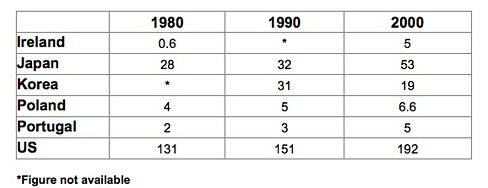
The table below shows the amount of waste production (in millions of tonnes) in six different countries over a twenty-year period.
范文:
The chart compares the amounts of waste that were produced in six countries in the years 1980, 1990 and 2000.
In each of these years, the US produced more waste than Ireland, Japan, Korea, Poland and Portugal combined. It is also noticeable that Korea was the only country that managed to reduce its waste output by the year 2000.
Between 1980 and 2000, waste production in the US rose from 131 to 192 million tonnes, and rising trends were also seen in Japan, Poland and Portugal. Japan’s waste output increased from 28 to 53 million tonnes, while Poland and Portugal saw waste totals increase from 4 to 6.6 and from 2 to 5 million tonnes respectively.
The trends for Ireland and Korea were noticeably different from those described above. In Ireland, waste production increased more than eightfold, from only 0.6 million tonnes in 1980 to 5 million tonnes in 2000. Korea, by contrast, cut its waste output by 12 million tonnes between 1990 and 2000.(165)
延伸阅读:
经营许可证编号:
京ICP备05067667号-32 | 京ICP证060601号|
京网文(2016)5762-750号 |
 京公网安备11010802021790号
Copyright 2011-2026 新东方教育科技集团有限公司, All Rights Reserved
新媒体平台资质审核电话:010-60908000-8941

导读:雅思考试写作task1想要达到9分需要完全满足所有的写作任务要求、清晰地呈现充分展开的写作内容;衔接手段运用自如,行文连贯,;熟练地运用分段;能自然地使用并掌握复杂的词汇特征;极少出现轻微错误,且仅属笔误,灵活且准确地运用丰富多样的语法结构;极少出现轻微错误,完全满足所有的写作任务要求,清晰地呈现充分展开的写作内容,有想要在雅思考试中得到写作高分的同学,长沙新东方为你准备了一则协作范文,分享给学生进行日常练习。
The table below shows the amount of waste production (in millions of tonnes) in six different countries over a twenty-year period.
范文:
The chart compares the amounts of waste that were produced in six countries in the years 1980, 1990 and 2000.
In each of these years, the US produced more waste than Ireland, Japan, Korea, Poland and Portugal combined. It is also noticeable that Korea was the only country that managed to reduce its waste output by the year 2000.
Between 1980 and 2000, waste production in the US rose from 131 to 192 million tonnes, and rising trends were also seen in Japan, Poland and Portugal. Japan’s waste output increased from 28 to 53 million tonnes, while Poland and Portugal saw waste totals increase from 4 to 6.6 and from 2 to 5 million tonnes respectively.
The trends for Ireland and Korea were noticeably different from those described above. In Ireland, waste production increased more than eightfold, from only 0.6 million tonnes in 1980 to 5 million tonnes in 2000. Korea, by contrast, cut its waste output by 12 million tonnes between 1990 and 2000.(165)
延伸阅读:

 @高三生,高考复习我有这些建议...
 @高三生,高考复习我有这些建议...